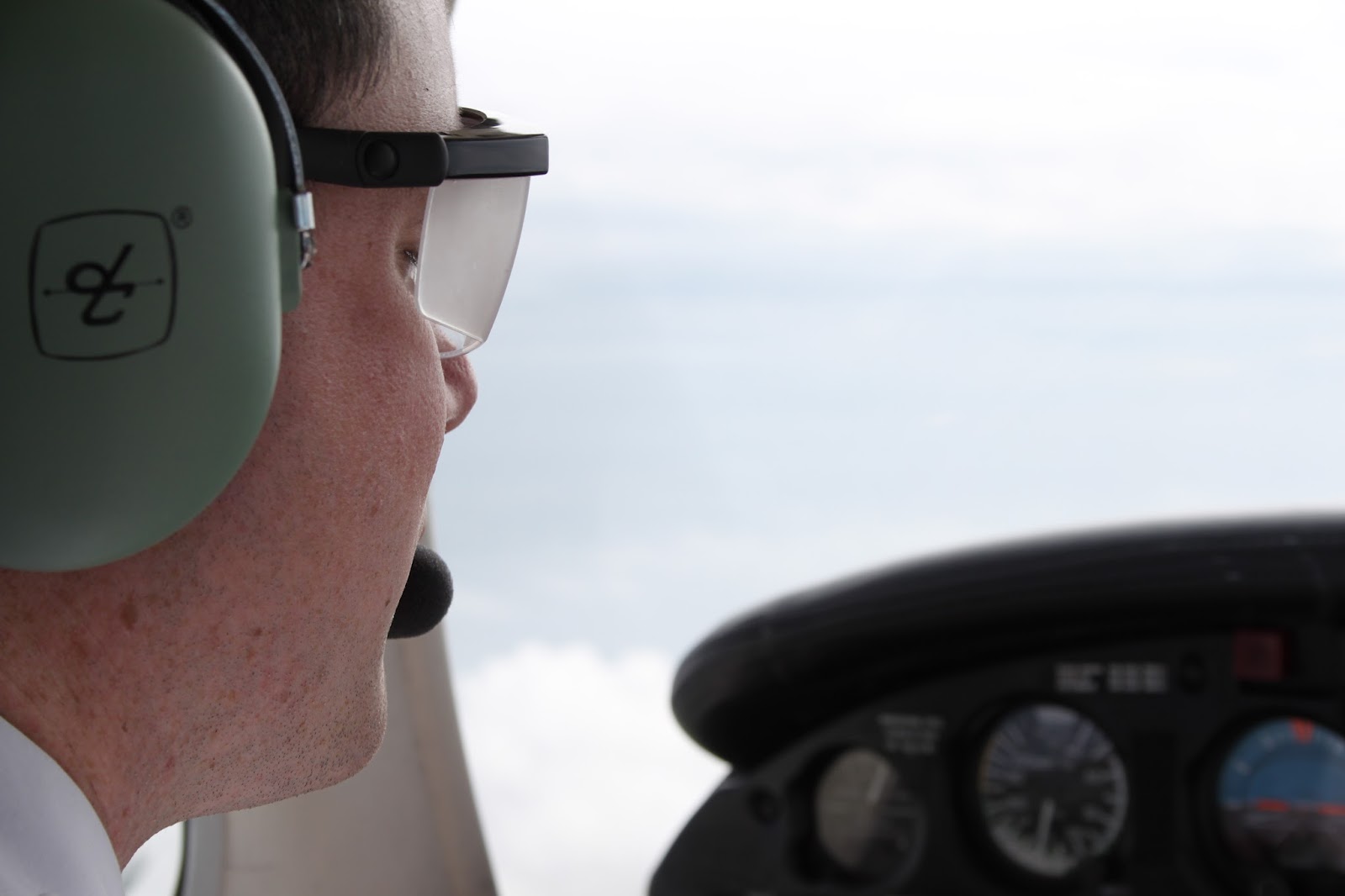
It's been a week of bits and bobs! Not much progress in the simulator but a few things happening outside of it to keep myself busy. The European championships are now in full swing which should hopefully take us through to the conclusion of our training here in Waterford. As well as that we've visited the tower on two separate occasions with things happening on both tours. There was also an interesting situation regarding a commercial flight doing a bit of 'off-roading!' I'll explain later on.
Firstly I managed to get in the simulator on Tuesday evening which was indeed quite challenging; as we come to reach the end of our time in the box. Since then I've observed one flight and had a ground lesson. Thankfully in the coming ten days or so we should really start to push to getting to the aircraft stage of the IR training. Having seen a couple of friends who have only just this week completed their course entirely it is time to start to come to terms with the fact that this part of our separate careers will shortly be coming to a close and we look to the future (which isn't too far in the distance!) where we begin training with the airline.
Having been told my base back towards the end of the ATPL period I have kept it quite low key (in fact hardly anyone knew until after we finished the exams - not wanting to tempt fate!) and in the same email we were given a start date for the commencement of our Type Rating which will be towards the end of July.
The Type Rating is the part of the training where we will be taught how to fly the exact type of aircraft we will be flying. This is done through ground school, simulator training and then finally taking to the right seat where we will be under supervision and scrutiny for a certain number of flights. I'll be sure to explain more how that works as the training continues.
So, with a short time until the commencement of our further training it's time to start to look at properties, cars, future plans etc. and try to build a life again after spending fourteen months cocooned in the world of PTC. It is going to be a weird feeling but one I am quite looking forward to!
But...before this takes place there are two final hurdles. The IR exam and the MCC/JOC (our final basic training course that I will also explain in a future post).
During our ground lesson on Friday evening, we were given the opportunity to visit the control tower here at Waterford. The airport is not Heathrow by any means but does provide a valuable and in some cases is a critical necessity to the city. It was great to meet such an enthusiastic controller who is superb at his job. He was very kind in showing us a number of the systems they use in controlling and planning at such a small field. It was great to see him liaise between the main ATC head quarters of Ireland in Shannon as well as Aer Arann's operations department in Dublin simultaneously to make sure the aircraft rotation was completed efficiently and correctly.
What was interesting at the time of our visit was the potential problem facing the crew at the time. The winds had been terrible all day and had been the cause of two flights in the morning being cancelled. One to London Southend and the second to Manchester. The afternoon Luton flight had managed to depart and we had arrived just in time for their delayed arrival back from the north London airport.
Again the winds were causing a problem for the airport and inbound traffic. Throughout the approach the controller was talking to the flight deck of the Aer Arann plane giving him live (2 minute average) winds for the field. The aircraft, under orders from the company, would only be able to land if the winds were at or below 25kts crosswind. It was going to be close.
As the aircraft turned on to final the winds died down and the aircraft was cleared to land. It was certainly an interesting approach with mother nature giving all those on board a bit of a ride but the aircraft was soon safe on the ground after a firm arrival. A very good job by those at the controls.
Unfortunately their work wasn't done. They had passengers to disembark as well as board while the plane was fed fresh Jet A fuel for the ride back to London, this time to Southend. Again, we got to experience first hand the work involved by the tower in providing all the necessary information to the crew before departure. It was also pretty cool seeing the whole operation with an unobstructed view from above.
Following our first visit we again made arrangements to head on up to the highest point on the field on Saturday. This was to see the arrival and departure of the daily Flybe flight to Birmingham. This flight began only shortly before we began training here in Waterford and has since struggled with loads but with a revised summer timetable and a bit of advertisement and awareness this route will hopefully pick up.
We arrived in the tower and met two of the other controllers who we would be working with over the coming weeks when we get into the planes and begin to practice what we have learnt in the simulator. Both again seemed extremely competent in their roles and it's quite comforting to know we're in the hands of people who really know what they're doing and do so in a calm, concise and professional manner.
As we entered the room we heard the Flybe aircraft make it's first contact.
"Waterford Tower, Jersey 755 is 20DME, flight level 80."
"Jersey 755, good afternoon. QNH 1015, ILS runway 21 in use. You're cleared to descend at your discretion to 4000ft; report established on the arc."
The above gives the aircraft approach instructions as well as key information about the airfield at that time.
We could slowly start to see the aircraft approaching in the distance.
"Jersey 755, report established on the localiser."
The aircraft continued it's approach until it received the correct information from the signal being sent from the far end of the runway.
"Jersey 755 is established on the localiser, 10DME."
This is the crew confirming that they're now established on final and reporting that they're approximately ten nautical miles from the airport.
"Jersey 755, roger, continue your approach."
As the aircraft became larger in view the time had come for the controller to issue the magic words.
"Jersey 755, you are cleared to land runway 21; winds are 250, 14 knots."
"Cleared to land runway 21, Jersey 755."
The aircraft arrived as smoothly as it is possible for a Bombardier Dash 8-Q400 and backtracked to park on stand. A quick change around and the flight deck requested it's departure clearances.
"Jersey 2FV, you are cleared to Birmingham and filed, route direct Strumble; initial flight level 130."
These words basically give the crew their instructions for the motorways (or highways) in the skies. In the aviation world they're called 'airways.' It also clears the aircraft up to 13,000ft. Before reaching that altitude the pilot not flying will be talking to Shannon control who will indeed clear the aircraft to the higher realms of the clouds.
There was a bit going on at the time the aircraft was waiting to depart including the local coast guard, the flight school and general aviation all causing work for the busy controller.
Soon enough the other magic words of "you're cleared for take-off" were issued by the man next to us and the turboprop engines were both filled with that all important juice. The Q400 accelerated down the runway at frightening speed before coming airbourne within half of the runway length and indeed followed by point it's nose towards the heavens. That thing climbs like nothing I have ever seen before. The words 'homesick angel' are often overused but I think in this case they're very relevant.
The controller said that for the Aer Arann flights he would ask that the crew report passing through 4,000ft where he would duly request they contact their next frequency. He then went on to say he asked the same question of the Flybe flight to which the reply was "we're already at 5,500ft..." I am certainly looking forward to getting to work in that office in the near future!
Finally, when we were in the simulator last week we were informed quite early on that the Flybe flight in from Birmingham had slipped a wheel off of the runway while trying to turn around to depart. Quickly enough we headed upstairs to a meeting room where we saw from the window the stuck aircraft.
I wouldn't like to comment on what took place as the report hasn't been released but unfortunately it led to the airport being closed for the evening due to the aircraft being on the only runway available at the field.
So a lesson learned - 100% awareness is needed 100% of the time!